We are innovators combining science and technology with deep industry expertise to solve complex subsurface and surface challenges. Learn more about the technology behind our solutions.
CMG has a rich history of bringing industry-first solutions to the market. Our expertise encompasses a broad spectrum of energy workflows and our technology can help energy companies navigate this complex landscape.
We are a global software and consulting company that combines science and technology with deep industry expertise to solve complex subsurface and surface challenges for the new energy industry around the world.
Optimizing the Zama Development Through Integrated System Modelling
How Harbour Energy used CMG’s IMEX and CoFlow to improve forecasting accuracy, optimize infrastructure design, and maximize recovery from one of the world's largest offshore discoveries.
Before first oil is produced, operators must make some of the most expensive decisions in a field's life.
Pipeline diameters are selected. Platforms are sized. Artificial lift strategies are planned. Water handling facilities are designed. These decisions often commit billions of dollars in capital years before actual production data becomes available.
For Harbour Energy's Zama development offshore Mexico, the challenge was particularly significant. With approximately 700 MMBOE of recoverable resources, Zama represents one of the largest shallow-water discoveries of the past two decades.
The question was straightforward:
How do you confidently design a field of this scale before first oil?
To answer it, Harbour Energy and CMG developed a fully integrated production system model (IPSM) using CMG IMEX and CoFlow, connecting the reservoir, wells, facilities, and export pipelines into a single forecasting environment.
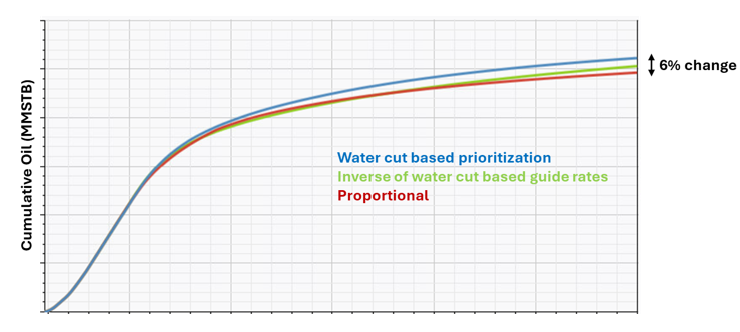
The study revealed that traditional forecasting methods were overestimating field performance, identified opportunities to optimize infrastructure design, and demonstrated how production management strategies alone could increase recovery by up to 6%.
The Challenge: Making Billion-Dollar Decisions Without Production History
The Zama development plan (as of c. 2024) included:
Two offshore production platforms
Twenty-eight producers
Eighteen water injectors
More than 66 km of export pipelines
Seawater injection from the start of production
At the same time, the reservoir contains a significant geothermal gradient that influences fluid properties and waterflood performance over time.
Every design decision depended on production forecasts.
But traditional workflows often evaluate reservoirs, wells, and facilities separately, introducing uncertainty into long-term development planning.
The team needed a way to evaluate the entire production system as a connected asset rather than a collection of individual components.
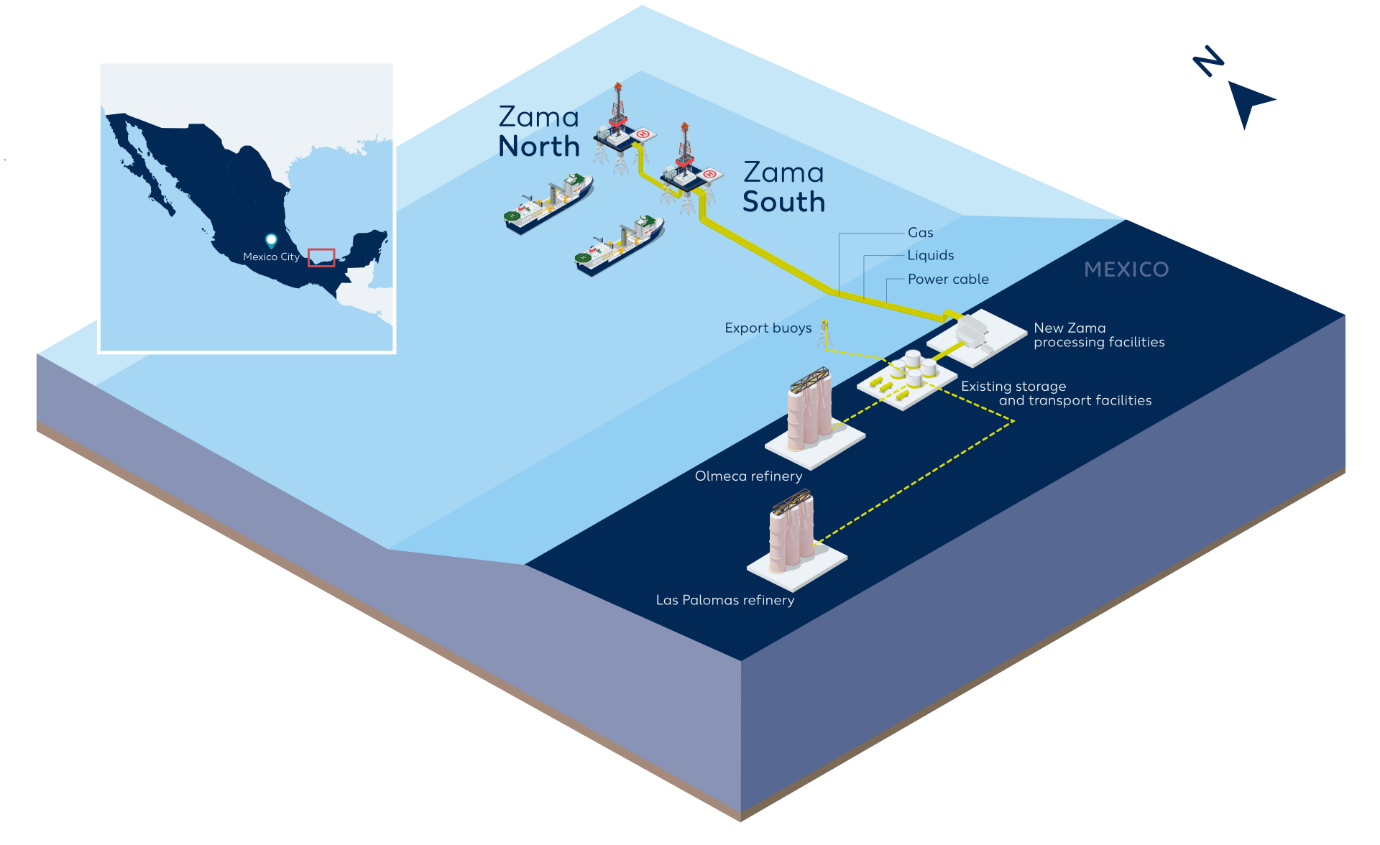
Overview of the Zama development, one of the world's largest shallow-water discoveries, including offshore infrastructure and planned production system (Source: World Oil, Wintershall Dea).
Building a Forecast That Reflects Reality
To answer this challenge, Harbour Energy and CMG developed a fully integrated thermal IPSM.
The workflow combined:
Thermal reservoir simulation in IMEX
Cold seawater injection dynamics
Wellbore hydraulics
Facility constraints
Export pipelines
Artificial lift systems
Production optimization strategies
Unlike traditional approaches, pressure losses, temperature changes, equipment limits, and operational constraints were calculated dynamically throughout field life.
This was not simply a more detailed model.
It was a different way of forecasting, one that allowed the entire production system to influence reservoir performance in real time.
Insight 1: Traditional Forecasts Were Overestimating Field Performance
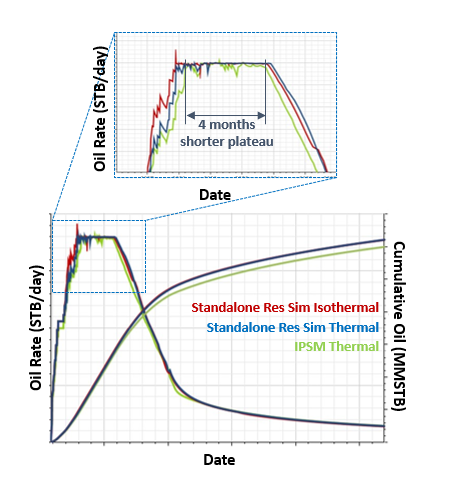
The first comparison evaluated the impact of IPSM relative to standalone reservoir simulation.
The results were significant.
The integrated model predicted:
4% variance in oil production
15% less water production
A production plateau approximately four months shorter
Comparison between standalone reservoir forecasting and integrated production system modelling.
Why It Matters
On a 700 MMBOE development, a 4% forecasting difference represents tens of millions of barrels.
That can materially affect platform sizing, water-handling infrastructure, artificial-lift planning, and project economics.
The difference was not caused by geology. It was caused by operational reality.
The IPSM captured facility backpressure, thermal effects, and system constraints that standalone reservoir models could not fully represent.
Insight 2: Thermal Effects Influence More Than Reservoir Performance
Because seawater injection begins at project startup, temperature changes propagate through the reservoir over time.
These changes alter:
Oil viscosity
Water viscosity
Fluid density
Well performance
Facility hydraulics
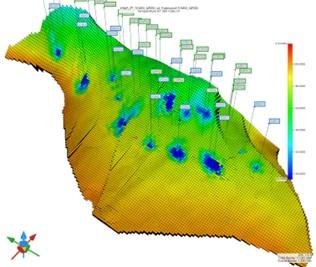
Thermal modelling captured the propagation of colder seawater fronts and their impact on reservoir and production system performance.
Why It Matters
Ignoring thermal effects would underestimate how fluid properties evolve over field life, reducing confidence in both production forecasts and facility design decisions.
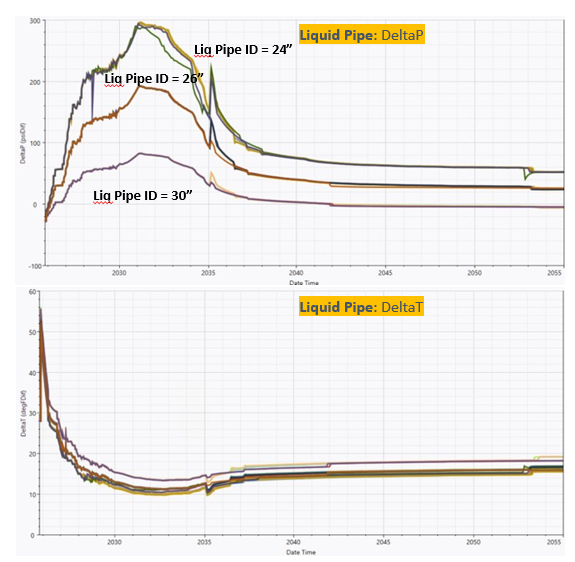
The team evaluated multiple pipeline diameter scenarios for:
Platform-to-platform transfer
Gas export
Liquid export
The objective was not simply to minimize pressure losses.
It was to understand how design choices would influence future operating requirements.
Gas pipeline sizing sensitivity showing pressure and temperature impacts across multiple design scenarios.
Liquid pipeline sensitivity analysis used to identify optimal export configurations.
Why It Matters
The smallest pipelines may reduce upfront capital costs but can introduce future compression requirements and operational constraints.
IPSM allowed the team to quantify these trade-offs before construction.
Insight 4: Production Management Was Worth More Than Additional Wells
Once the integrated model was established, the team evaluated multiple production allocation strategies.
Rather than treating all wells equally, production was prioritized based on water cut, GOR, and other operational metrics.
Recovery improvements achieved through alternative production allocation policies.
The best-performing strategy increased cumulative recovery by approximately 6%.
Why It Matters
No new wells were drilled.
No changes were made to the reservoir.
The value came entirely from better production decisions.
The Economic Impact
The combination of:
Improved forecasting accuracy
Optimized infrastructure sizing
Enhanced production management
created substantial economic value.
Integrated production system modelling identified opportunities exceeding $1 billion in potential value while increasing recovery by up to 6%.
For an asset the size of Zama, even small improvements in forecasting and optimization can translate into significant long-term returns.
Insight 5: Additional Recovery Possible with Design Optimization
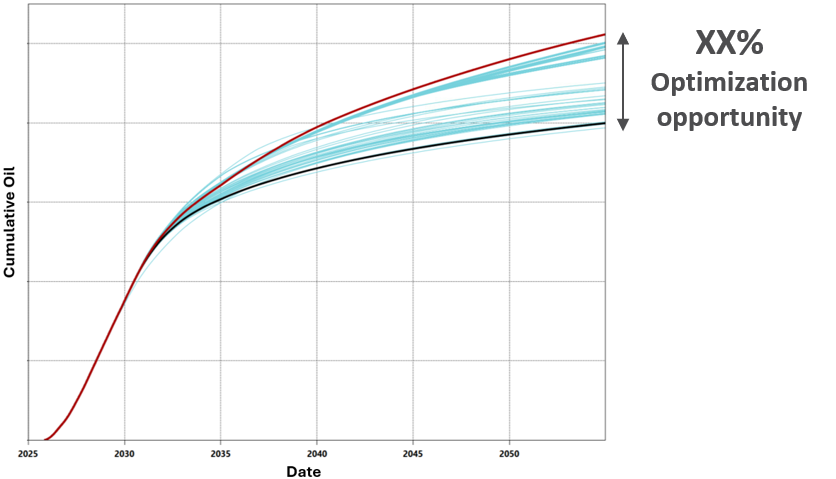
With an accurate, integrated model, the options to incorporate subsurface uncertainty and wells and facilities design parameter optimization become possible.
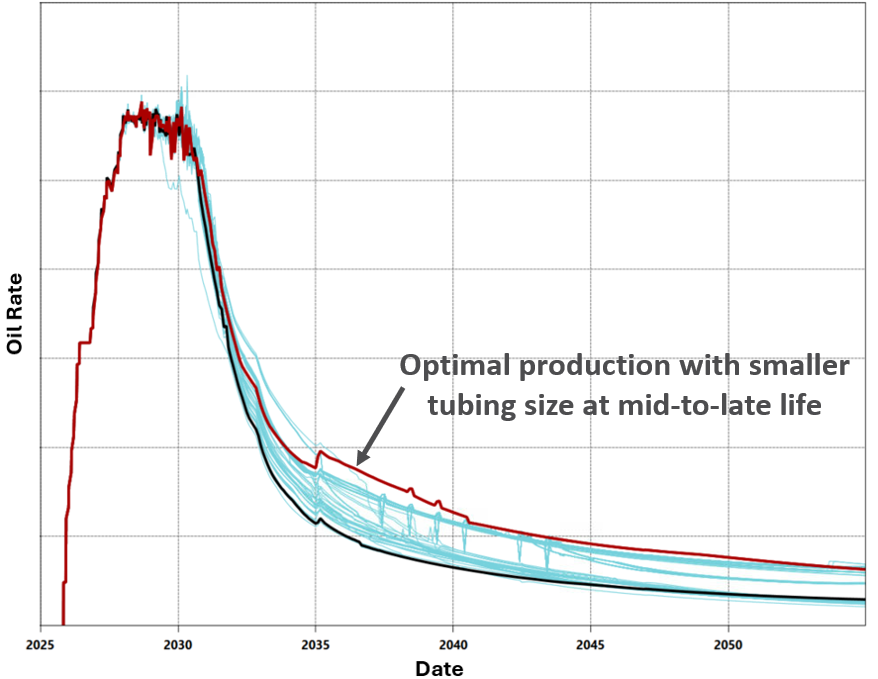
Rather than using a single well and facility design concept, the team investigated the possibility of extracting additional recovery by altering parameters such as tubing diameters, pipe IDs, and ESP settings.
Why it matters
This presented a compelling case for re-looking into some of the design parameters – logistics permitting – particularly for uncompleted wells – as the smaller tubing size was the most impactful. While assets could plan for installing a smaller diameter tubing later in field life to enable recovery from a depleting field – the study showed that installing a smaller tubing from the start didn’t have a detrimental effect on ultimate recovery or plateau production, increased the ultimate recovery by enhancing late-life production, and removed the need for multiple workover jobs for tubing replacement during late-life.
Why CoFlow Matters
This project demonstrated that development planning is no longer just a reservoir engineering exercise.
Reservoirs, wells, facilities, pipelines, and operational constraints all influence one another.
CoFlow enabled Harbour Energy to evaluate these interactions within a single integrated environment.
By coupling thermal reservoir simulation with production system modelling, the team moved beyond isolated forecasts and gained a more realistic understanding of how the field would perform once brought online.
Conclusion
For Zama, the question was never whether the reservoir could produce.
The challenge was understanding how the entire production system would behave once temperature effects, facility constraints, pipeline hydraulics, and operating decisions were taken into account.
By integrating these elements into a single forecasting environment, Harbour Energy was able to design the development around how the field would actually perform, not how it was expected to perform.
Ultimately, the most important development decisions are often made before first oil.