Updated November 2026 with the latest results. See every current benchmark in the Benchmark Hub.
This is Part 3 of the Accuracy at Speed series.
Speed is only valuable when it honors the physics that matter.
By now, the trade-off between simulation speed and accuracy should feel familiar. Faster results enable better decisions, but only if the underlying physics is sound. Cutting corners may deliver answers sooner, but it also introduces blind spots that surface later, when decisions are harder or impossible to undo.
The real question, then, is not whether speed matters - it does. The question is how speed is achieved. In this final article of the Accuracy at Speed series, I want to focus on what that balance looks like in practice.
Achieving faster simulations without compromising accuracy often comes down to a few controllable choices teams can make today.
These best practices only work when the underlying software continues to evolve, and that’s where sustained engineering investment matters.
Our teams made 2025 a year of continuous performance advancements, and that work has carried into 2026:
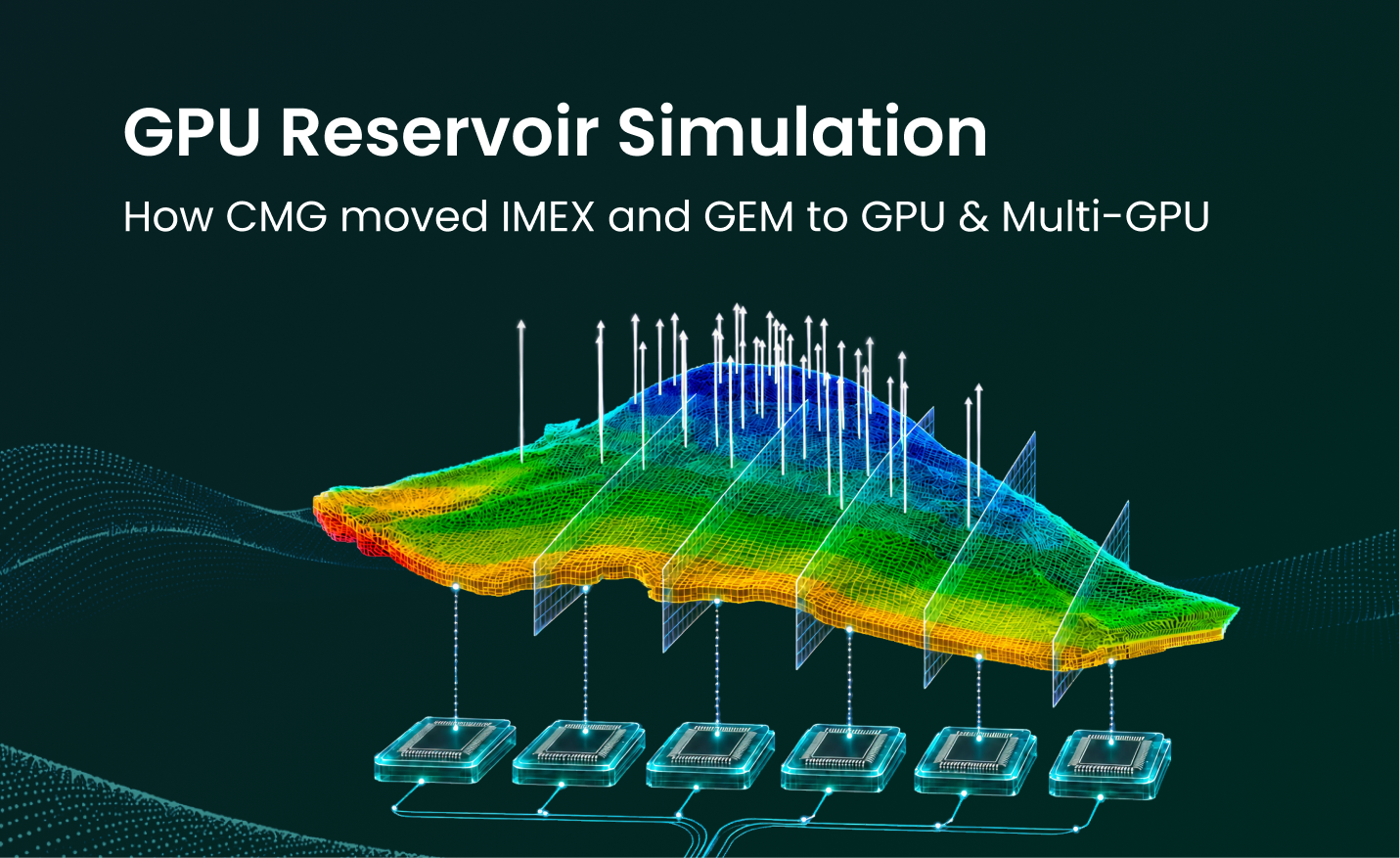
- IMEX on GPU: commercially released in 2025. With the GPU switched on, IMEX runs up to 2.4 times faster than on CPU on production-scale models, and independent testing by UNISIM at CEPETRO/UNICAMP measured runtimes up to 70% shorter.
- GEM on CPU: 1.8 times faster on average from the 2025.11 to the 2026.11 release, and up to 2.8 times on some models.
- GEM on GPU: customers tested pre-commercial builds through 2025, and it became commercially available in September 2026. It runs 1.6 times faster than on CPU on average, and more than 3 times faster on large models.
- What’s next: multi-GPU for GEM in January 2027 and for IMEX in the first half of 2027, then STARS on GPU in the second half of 2027.
CMG’s iterative approach – develop, test with users, refine, then release – highlights a best practice in the software industry. By continuously working with real-world models and incorporating customer feedback, we ensure that speedups are achieved without sacrificing accuracy or stability.
What’s important here is not just the individual speedups, but the pattern behind them. Each release reflects the same principle: performance gains should come from better math, better algorithms, better use of modern hardware, and not from cutting physics. This is how we continue to expand what “Accuracy at Speed” means in practice, giving users the confidence to run bigger models, explore more scenarios, and make decisions faster without compromising the science underneath.
Conclusion: Balancing Speed and Accuracy for Better Decisions
In the dynamic world of oil and gas, the ability to rapidly simulate and forecast reservoir behavior has shifted from a technical convenience to a strategic necessity. Faster simulation speeds enable teams to evaluate more scenarios, reduce uncertainty, and optimize outcomes in a timely manner. From avoiding costly drilling mistakes to maximizing recovery through agile field management, the impacts of speed are felt across the value chain.
Speed, however, must come with accuracy. The industry rightly insists that any accelerated simulation still honors the physics and field data. Because the barrels that the simulation misses won’t magically appear in production. They vanish quietly into poor decisions, never to be recovered. And that’s the hidden cost of choosing 'good enough'.